Kicked off a new sprint for our Tokenizer program. Over the next few weeks we will be working with a new kind of AI agent: always-on and fully autonomous.
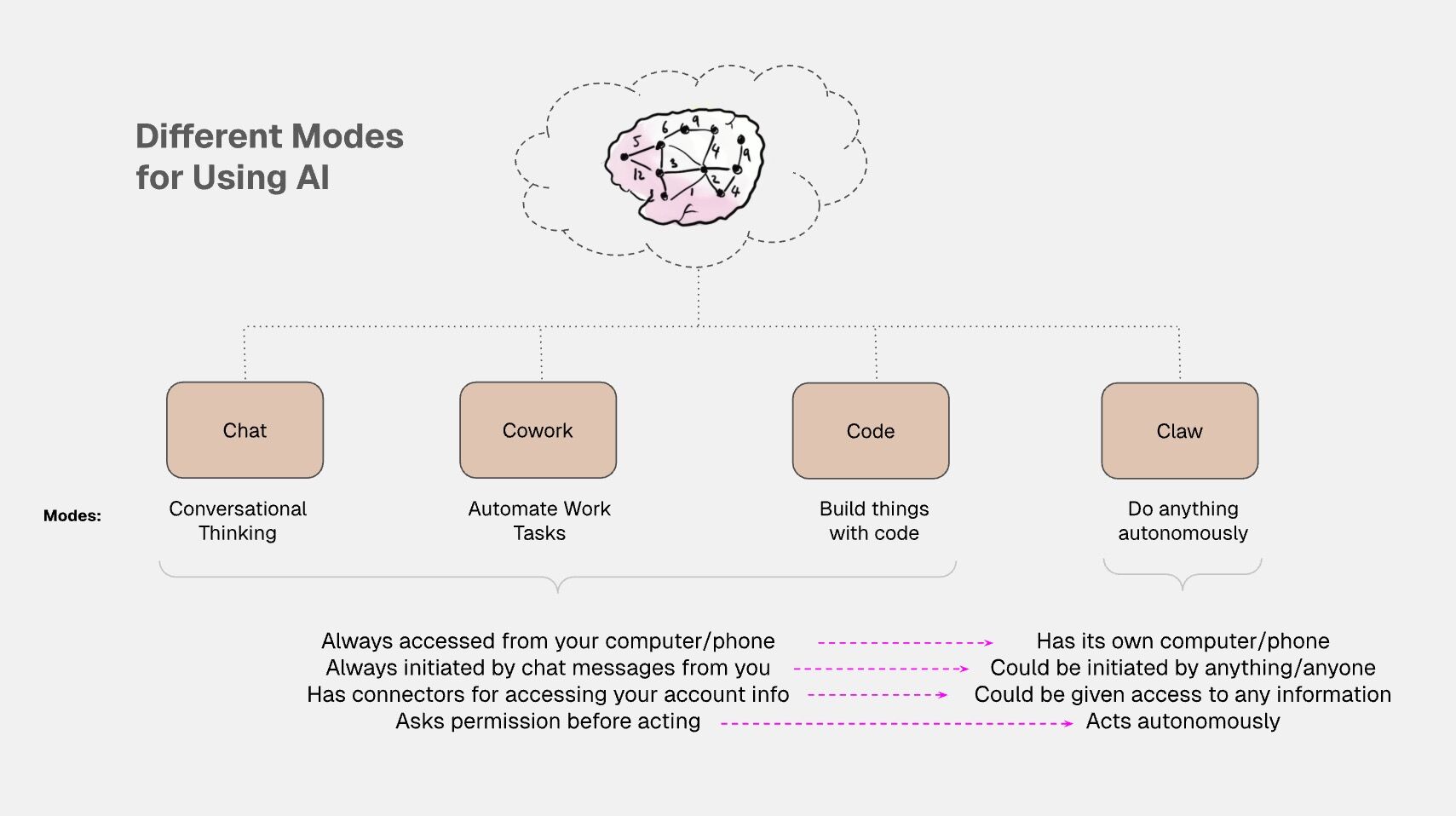
These agents have taken on the moniker of “claws” thanks to the Openclaw project which has gone viral over the last month. Claws are a bit different to the other kinds of agents we have been introduced to over the last couple of years:
- Chat agents like ChatGPT, Claude and Gemini enabled “conversational thinking”, an entirely new way of using the web to access and create knowledge.
- Cowork agents change the way knowledge workers get desktop tasks done because of their ability to work with documents and files on our computers.
- Coding agents automated how code gets written. In the process, they have lowered the floor for non-coders to create software and raised the ceiling for professional software developers to build ambitious systems on their own.
Claws are a new mode. Unlike the other agents, they do not just respond when users send them messages and they do not shut down when you close your computer.
Claws run full-time on their own computer, are always connected, and can be triggered by many other signals, including inbound messages, emails, calls, sensors, data changes and scheduled tasks.
I think of this category as “ambient” agents.
Unlike the other agent modes, claws have (by default) wide permissions to do everything a human would be able to do on that same computer. This means claws have both huge potential utility and inherent security risks.
In our show and tell session, it was great to hear from Hub members that are already getting value out of this new mode and figuring out how to manage the risks. Many thanks to the presenters: Paul Rowsthorn, Alex Knight, Zachary King, Andrew Birt, Ian Thomson, EdD and special thanks to Richard Low for the onboarding walkthrough.


